When the Vendor Pulls the Plug: Auditing Your Enterprise's Hidden API Dependency Web

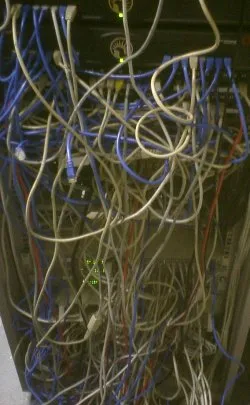
Photo: Ana Las Heras, CC BY-SA 4.0, via Wikimedia Commons
Somewhere in your enterprise right now, an email from a vendor is sitting unread in a distribution inbox. It announces the deprecation of an API endpoint your organization depends on — perhaps indirectly, perhaps in ways no one has documented. The deadline is twelve months out. By the time anyone notices, that window will have collapsed into a quarter of emergency engineering work, deferred roadmap items, and a very uncomfortable conversation with the CFO.
This is the deprecation domino, and it falls more often than most technology leaders care to admit.
The Cascade Is Rarely Obvious
The naive view of a third-party API change is linear: vendor removes endpoint, team updates code, work complete. Enterprise reality is messier. The deprecated endpoint might be called by a middleware layer, which feeds a reporting pipeline, which populates the dashboards your compliance team reviews quarterly. None of this appears in any single team's documentation because each hop lives in a different org chart.
Consider a pattern that plays out repeatedly across American enterprises: a payments processor deprecates an older authentication flow. The integration team updates the customer-facing checkout in two sprints. But a batch reconciliation job, written by a contractor who left in 2019, still authenticates the old way. It doesn't fail loudly — it fails partially, three weeks later, when finance notices settlement discrepancies. By then, the fix requires forensic work across systems nobody owns end to end.
The lesson is uncomfortable but consistent: the cost of a deprecation is proportional to the invisibility of the dependency, not the importance of the API.
Why Dependency Mapping Never Gets Done
Most organizations know they should maintain an inventory of external integrations. Few do, for understandable reasons. Dependency maps decay the moment they're finished. Teams lack tooling to detect outbound API calls automatically. And nothing forces the issue until a vendor deadline does.
There's also a structural problem: the teams consuming an API are often not the teams that integrated it. In large US enterprises, integration work is frequently done during a migration or acquisition, staffed by contractors, and handed off with minimal documentation. Five years later, the original context is gone, but the calls continue — quiet, load-bearing, and unrecorded.
Building a Practical Dependency Map
A perfect inventory is unachievable; a useful one is not. Start with egress, not documentation. Modern API gateways, proxy logs, and cloud egress monitoring can reveal which services actually call external endpoints — reality beats any wiki. Cross-reference that traffic against vendor contracts to identify which providers carry notification obligations and which ones could change terms with ninety days' notice.
Then classify by blast radius. For each external dependency, ask three questions:
- What breaks if it disappears tomorrow? Not what the vendor says breaks — what your logs say breaks.
- Who can fix it, and do they know they own it? An integration without a named owner is an incident waiting for a calendar date.
- How long would a replacement take? If the honest answer exceeds two quarters, that dependency belongs on an architecture risk register, not in tribal knowledge.
Reading Vendor Timelines Before They Read You
Vendors telegraph deprecations, but the signals require interpretation. API versioning changes, new terms-of-service language around legacy endpoints, and the sunsetting of older SDKs all precede formal announcements. Enterprises that treat vendor release notes as compliance reading — assigning ownership and reviewing them on a cadence — buy themselves months of lead time that late responders spend paying contractors overtime.
A workable playbook looks like this: subscribe to every critical vendor's deprecation feed through a monitored channel, not individual inboxes. Triage each notice within a week against the dependency map. Assign a remediation owner with a real deadline and a line item in the sprint plan. And for dependencies where migration is genuinely hard, negotiate extended timelines early — vendors grant accommodations far more readily eighteen months out than eighteen days.
The Strategic Payoff
Handled well, deprecation response becomes a capability rather than a crisis. Organizations with living dependency maps convert vendor deadlines into planned roadmap work. They negotiate from strength because they know exactly what they can and cannot walk away from. And they discover, sometimes, that a forced migration is the push needed to retire integration debt that no one could justify fixing otherwise.
The dominoes will fall. The only question is whether your organization arranged them or is standing among them.