The Integration Audit Nobody Runs: Five Warning Signs Your Enterprise Data Flows Are One Change Away From Collapse
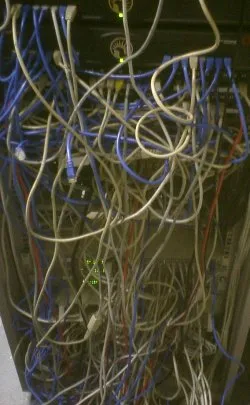
Photo: Edward at English Wikipedia, Public domain, via Wikimedia Commons
Every enterprise integration strategy begins with an architecture diagram. Somewhere in a SharePoint library or a Confluence space from 2019, there is a clean picture of how systems are supposed to talk to each other. The reality inside the integration layer is usually far messier: undocumented file drops, scheduled jobs nobody remembers creating, and API credentials shared over email years ago.
The dangerous part is that fragile integrations rarely announce themselves. They function—until a vendor updates an API, a certificate expires, or a single field changes format, and half the finance close process grinds to a halt. Below are five warning signs that your integration landscape has become a house of cards, along with diagnostics your team can run this quarter.
1. The Question 'Who Owns This Interface?' Has No Answer
Ask three teams who is responsible for the interface between your ERP and your warehouse management system. If you receive three different answers—or three shrugs—you have an ownership vacuum. Interfaces without owners do not get monitored, patched, or documented; they simply run until they fail.
Diagnostic: Pull the list of every scheduled integration job from your middleware or scheduler. For each, identify a named accountable owner. Anything unclaimed within two weeks belongs on a formal remediation list.
Remediation: Assign ownership even if the system is slated for retirement. An owner can be a team, not a person, but it must be a name someone recognizes.
2. The Documentation Has Not Touched Reality in Years
If your integration diagram predates your last major ERP upgrade, it is fiction. In most enterprises, the accurate map lives in the heads of two or three senior engineers—and in the code itself.
Diagnostic: Pick five production integrations at random. Compare the documented data flow against what actually appears in logs or message queues. More than one material discrepancy out of five is a red flag.
Remediation: Stop trying to document forward and instead generate documentation backward from runtime evidence. Automated dependency discovery tools can produce a baseline far faster than interviews.
3. Change Windows Are Treated Like Bomb Disposal
When releasing a change to the order management system requires a four-hour freeze, three bridge calls, and a database rollback script on standby, the integration layer is telling you something. Excessive ceremony around routine changes indicates that blast radius is unknown—which is another way of saying dependencies are unknown.
Diagnostic: Review the last ten change tickets involving integrated systems. Count how many included the phrase 'unknown downstream impact' or required a subject-matter expert to be on call 'just in case.'
Remediation: You do not need a replatform to shrink blast radius. Introduce contract testing between the highest-traffic interfaces so that breaking changes surface in CI, not in production.
4. Data Flows Through Systems That Should Be Bystanders
A classic enterprise pathology: the CRM reads a customer status field that is actually maintained by the payroll system, because someone in 2016 needed the data and the shortest path ran through an adjacent platform. These accidental dependencies mean that a routine HR system change can break the sales pipeline.
Diagnostic: Trace three business-critical data elements—customer status, product availability, invoice state—from origin to every consumer. Count the hops. If a data element passes through a system that has no business reason to touch it, you have found a hidden coupling.
Remediation: Route these flows through a sanctioned integration layer or data platform, even a lightweight one. The goal is not elegance; it is making the dependency visible and governable.
5. Nobody Can Rebuild the Integration From Scratch
The ultimate fragility test: if a critical interface failed permanently, could your team reconstruct it? If the answer depends on the availability of a specific contractor, a consultant who left in 2021, or tribal knowledge never written down, the integration is a liability regardless of how well it runs today.
Diagnostic: For your five most business-critical interfaces, ask whether two different engineers could independently rebuild or replace them using existing documentation. Any 'no' is a single point of failure wearing an uptime badge.
Remediation: Prioritize knowledge capture on rebuildability, not on exhaustive specs. Recorded walkthroughs, annotated code, and interface contracts deliver most of the value at a fraction of the effort.
Stabilize Before You Modernize
The instinct upon discovering these symptoms is often to propose a full integration platform overhaul. Resist it. A replatform executed without first understanding your actual data flows simply transfers the fragility to new infrastructure at a much higher price point. Stabilize what exists—assign owners, generate real documentation, add contract tests—and you will find that whatever you eventually build next is designed against reality rather than against a diagram.