Witnesses Chosen by the Defense: Rethinking Vendor Reference Checks in Enterprise Procurement

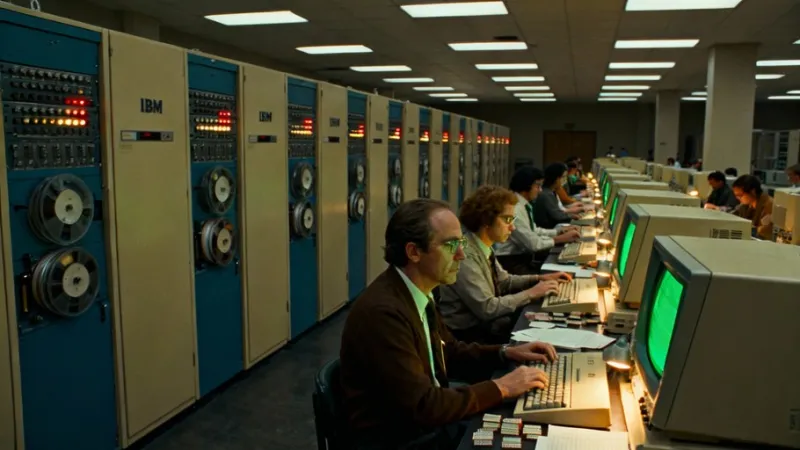
Photo: Richter Frank-Jurgen, CC BY-SA 2.0, via Wikimedia Commons
A reference call is one of the few moments in an enterprise software purchase when a buyer can hear from someone who has already lived with the consequences of the decision. It is also, in most deals, the most carefully curated moment in the entire procurement cycle.
The pattern rarely varies. The vendor offers three logos. Two customers are on a first-name basis with the account executive. The third is a marquee name whose participation was negotiated at the executive level. All three take the call promptly, all three speak warmly about the partnership, and none of them mention the eighteen-month upgrade backlog, the integration that had to be rebuilt twice, or the support ticket that sat open for six weeks while a nightly batch job failed quietly and repeatedly.
None of this is necessarily dishonest. It is selection. And selection is precisely the problem.
Selection Is the Message
A reference list is not a sample of the vendor's customer base. It is a sample of customers who agreed to be on a reference list, which is a materially different population. These are typically accounts with healthy executive relationships, recent renewals, and often an active co-marketing arrangement. The customers most qualified to describe operational friction are frequently the ones least likely to take the call, because they are still angry.
Procurement teams should ask how the list was assembled before they ask a single question of the reference. How many customers were approached, and how many declined? Were any customers who terminated or substantially reduced their footprint in the past twenty-four months considered? Who inside the vendor approved the list, and does the vendor's customer success organization have veto power over who gets called?
The answers are revealing. A vendor that can name its attrition cohort and explain what went wrong in those accounts is demonstrating more maturity than one that can only produce enthusiastic advocates.
Four Questions That Break the Script
Most reference calls fail because the buyer asks the same questions the vendor already knows the answers to. "How was implementation?" invites a rehearsed narrative. The following questions are harder to script, because they require specific operational recollection.
Walk me through your last major version upgrade. Not whether it went well — what actually happened. How long did it take, who performed the work, how much downtime was involved, and what broke that was not in the release notes?
Tell me about the worst support ticket you filed in the past year. Request the severity classification, the time to first meaningful response, and whether resolution came from a support engineer or from an account manager escalating internally. The distinction matters enormously and rarely appears in a vendor's service-level summary.
What did implementation cost relative to the contract value? This question surfaces professional services spend, internal labor, third-party integrator fees, and the opportunity cost of the internal team members who were effectively borrowed for a year.
What would you do differently if you were signing this week? This is the question most likely to generate an unguarded answer, particularly if the reference is speaking to a technical owner rather than an executive sponsor.
Support Escalation: The Question Behind the Question
Every enterprise vendor publishes severity definitions. Far fewer publish what those definitions mean in practice. Ask the reference customer to describe the escalation matrix in concrete terms: which role owns it, how quickly that role engages, and whether the reference has ever invoked it.
Then ask about the last Sev-1 incident and request a rough timeline in hours. Procurement should pay attention to whether the answer describes a named engineer who knew the account or a rotating queue that restarted context with every handoff. For systems that carry revenue or regulatory exposure, the difference between those two models is the difference between a recoverable incident and a costly one.
Upgrade Friction and Integration Debt
Enterprise platforms spend the overwhelming majority of their life in steady-state operation rather than initial deployment, yet most reference calls dwell almost exclusively on the deployment. Redirect the conversation. How many custom integrations exist today? Who maintains them? What happens to each one at every release cycle? Has the customer ever skipped a release, and what did skipping cost them later?
Integration debt is the most reliable leading indicator of long-term total cost of ownership, and it is almost never discussed on a vendor-scheduled call. If the reference cannot produce a current integration inventory off the top of their head, treat that as data about the account's maturity — and ask what the vendor's own professional services team charges to maintain one.
Renewal Leverage: Ask About Year Three
The commercial structure of year three is where enterprise software economics are decided. Ask about renewal uplift caps, true-up mechanics, and how unused licenses are treated. Ask what percentage of licensed seats are genuinely active, and ask when the customer last received a credible usage report from the vendor rather than compiling one internally.
A reference customer who cannot answer these questions is telling the buyer something useful: this relationship is managed at the relationship level, not the commercial level. Buyers should plan accordingly.
Turning the Call Into Evidence
Reference validation should be documented before it begins. Send the same written questionnaire to every reference in advance, so that responses can be compared rather than merely heard. Request access to a technical owner in addition to the executive sponsor. Ask to speak with a customer that is not on the supplied list, and note how the vendor responds to that request — the response itself is evidence.
Where the reference customer is a public company or a regulated entity, cross-check the conversation against what is publicly observable: status page incident histories, disclosed outages in filings, or public postmortems. Discrepancies between the narrative on the call and the public record should be documented and raised with the vendor in writing.
What Procurement Should File
The output of reference validation is not a note that the call occurred. It is a memo that records the questions asked, the answers received, the points at which references corroborated or contradicted the vendor's proposal responses, and the open items requiring follow-up. That memo should be an explicit input to the final evaluation, weighted alongside the technical and commercial scorecards rather than treated as a courtesy step before signature.
Reference checking is not relationship theater. It is the only point in the buying process where the buyer gets to test the vendor's claims against operational reality, and it deserves the same rigor as the security review or the pricing negotiation.